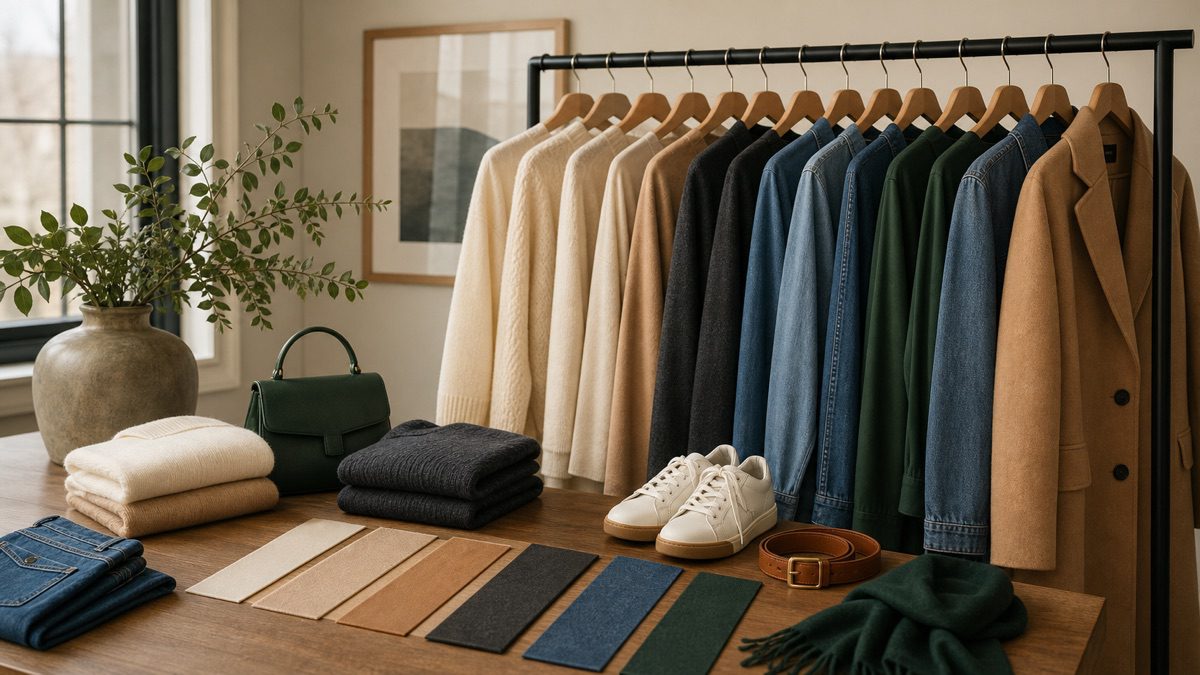
Create a wearable wardrobe color palette from colors you already repeat, your contrast preferences, and real outfit combinations.
Collect evidence from favorite outfits
Photograph ten outfits you enjoyed wearing and identify repeated colors. Include shoes, coats, and bags because they occupy significant visual space. Colors that look appealing in isolation are less useful than colors already participating in successful outfits.
Choose working neutrals
A neutral is simply a color you can repeat easily. Black, navy, charcoal, cream, brown, olive, and denim can all serve this role. Select a small group that works across seasons and with the maintenance you accept; pale neutrals may require more frequent cleaning.
Add accents at useful scale
Decide whether you enjoy accent color in large garments, tops near the face, or small accessories. A bright coat and a bright scarf serve different comfort levels. Choose accents that connect with at least two working neutrals and one existing print.
Consider contrast and texture
Some people prefer close tonal combinations, while others feel better in sharp light-dark contrast. Texture changes color perception: matte wool, washed denim, silk, and polished leather reflect light differently. Test combinations in daylight and in complete outfits.
Create a portable palette
Save a simple note with color names and photographs of key pieces. Use it while shopping online and in stores. The palette is a filter, not a restriction; update it when your routine, hair color, climate, or preferences change.
Frequently asked questions
How many colors should a wardrobe palette include?
Five to eight working colors is a practical starting range, including neutrals and accents.
Does every item need to match every other item?
No. Aim for several dependable combinations, not universal compatibility.
Can prints belong in a capsule palette?
Yes, especially when they repeat colors already used elsewhere.
Should skin tone determine my colors?
Personal comfort and outfit use matter more than rigid color rules.
Can a wardrobe palette change by season?
Yes. Keep some core neutrals and adjust accents or fabric tones seasonally.
Build the palette from photographic evidence
Photograph the wardrobe in daylight and group images by color rather than relying on memory. Note which neutrals repeat, which accents already have supporting pieces, and which colors are frequently avoided. Phone cameras and screens shift color, so use the photographs for pattern recognition rather than exact matching.
Assign different jobs to color
A useful palette may include base neutrals for larger garments, supporting colors for tops and layers, and smaller accents for accessories. The proportions do not need to be equal. Outerwear and shoes deserve special attention because they interact with many outfits. When shopping, compare a new shade beside actual wardrobe pieces whenever possible.
Palette checklist
- Core neutrals already appear in high-use items.
- Accent colors have at least two partners.
- Outerwear works across the main palette.
- Near-matching shades look intentional together.
- New colors solve a real outfit need.
Related ChicSeed guides
Continue with these practical guides from the same topic area:
