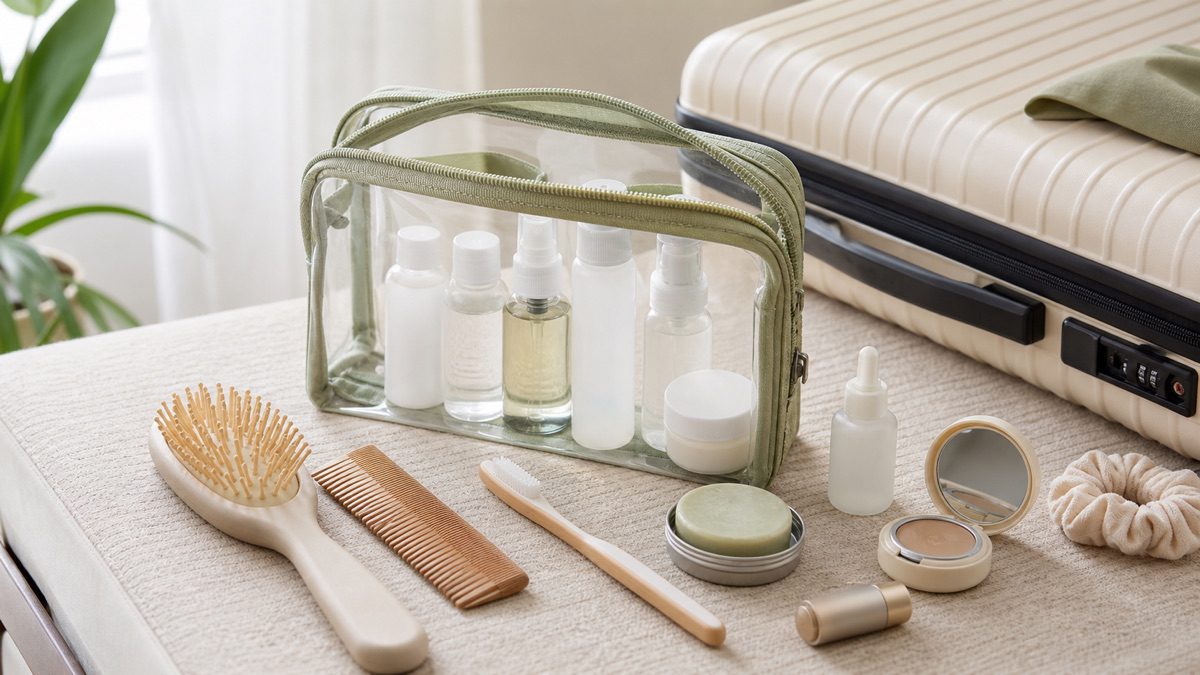
Build a compact carry-on toiletries kit by tracking daily use, reducing duplicates, preventing leaks, and respecting current travel rules.
Track a normal routine
For several days, note every product used from morning through bedtime. Separate essentials from optional treatments and items supplied by the accommodation. This prevents packing aspirational products that are unlikely to be used while traveling.
Right-size each quantity
Estimate uses rather than filling every travel bottle. Short trips may require surprisingly little cleanser, shampoo, or moisturizer. Label reusable containers clearly and avoid transferring products that react with unsuitable packaging. Keep original labels for medication when required.
Prevent leaks
Choose containers with secure closures, leave a little expansion space, wipe threads before closing, and place liquids in a sealed transparent bag. Solid products can reduce leak risk, but test them at home first rather than changing an entire routine during travel.
Separate critical items
Medication, contact lens supplies, essential skin products, and one basic hygiene set should remain in the personal item when checked luggage is involved. Pack prescription documentation and temperature-sensitive items according to professional guidance.
Review rules before departure
Liquid screening rules and permitted items can change by airport, country, and screening technology. Check the official guidance for the departure airport and destination shortly before travel rather than relying on an old packing list.
Frequently asked questions
How much shampoo is needed for a week?
Estimate the number of washes and measure a normal use at home; needs vary greatly by hair length and routine.
Should toiletries stay in original containers?
Medication often should; other products can use suitable labeled travel containers when rules permit.
How do I stop bottles from leaking?
Use reliable closures, avoid overfilling, clean threads, and place liquids inside a sealed bag.
Are solid toiletries always easier?
They reduce liquid volume but still need suitable storage and should be tested before travel.
Where should essential medication be packed?
Keep it accessible in a personal item and follow current official and medical guidance.
Check current transport rules before decanting
Liquid, aerosol, gel, medication, and security requirements vary by route, airport, carrier, and country and can change. Consult the relevant official source before travel. Keep original labels where identification or directions matter, and never transfer products into food containers or unmarked vessels that could create confusion.
Run a leak and routine test
Use the travel containers at home for several days to confirm quantity, dispensing, skin compatibility, and closure. Fill with some air space when appropriate, wipe threads, close firmly, and keep leak-prone items in a secondary pouch. Pressure changes do not affect every package the same way, so a successful sink test is not an absolute guarantee.
Toiletry checklist
- Current official travel rules were checked.
- Every product supports the actual itinerary.
- Containers were tested before departure.
- Important directions remain identifiable.
- Leak-prone items have secondary containment.
Related ChicSeed guides
Continue with these practical guides from the same topic area:
