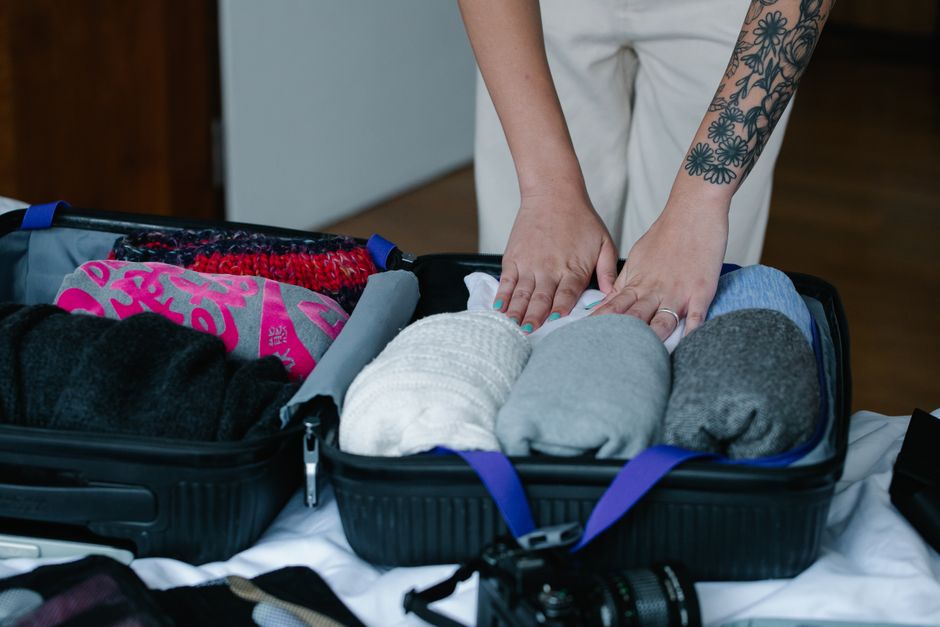
A carry-on looks tidy when you zip it at the door and less tidy after an overhead bin. Some of that is unavoidable motion. A lot of it is packing method: rolling things that should be folded, folding things that would have been happier in a tight roll, and leaving hard items where they can crease a collar.
This is a packing method guide, not a luggage review. Chic Seed has not run a lab wrinkle test for this article. It complements the packing lists you already have here: the travel wardrobe guide, how to pack for a weekend trip in one small bag, and how to pack shoes without filling the suitcase. Choose the clothes first with those pieces, then use the folding and rolling notes below to make them arrive in wearable shape.
Roll, fold, or bundle — pick by fabric, not by habit
Roll casual knits, T-shirts, pajamas, workout clothes, and most cotton or jersey pieces that do not have a sharp crease you need to keep. A firm roll, without a twisted bun at the end, reduces empty air and limits large diagonal wrinkles. Place rolls in rows, like a drawer, so you can see each piece without unpacking the whole bag.
Fold shirts that should keep a front placket, tailored trousers, blazers, stiff denim you do not want wavy at the thigh, and anything with a structured shoulder. Fold along existing seams where you can. For a button-down, button it, flip the shoulders back, and fold to a length that matches the case, with the collar protected, not crushed against a shoe heel.
Bundle or sandwich a slightly dressier outfit in a layer of tissue, a dry-cleaner bag, or a second similar garment, then set that stack in the middle of the case with softer rolls around it. The goal is to reduce friction and sharp creases, not to invent a military packing contest.
Delicate fabrics — silk, viscose that wrinkle-prints easily, linen you want to look intentional rather than crushed — do better with a loose fold and a protective layer than with a tight roll. Linen will wrinkle anyway; pack it knowing you will steam or hang it on arrival, and keep it out from under the heaviest shoes. Our linen care guide is useful once you unpack.
| Item | Better method | Placement in the bag |
|---|---|---|
| T-shirts, tees, knit sweaters | Firm, even rolls | In rows along the base or in packing cubes so you can see colors |
| Button-down shirts, blouses | Folded, collar guarded; optional dry-cleaner bag | Higher in the case, not under shoes |
| Trousers and dark denim | Folded along the crease or the seam | Flat, with the fold away from hard corners |
| Shoes | In bags, stuffed with socks to hold shape | Along an edge, soles outward; see the shoe-packing guide |
| Toiletries and liquids | Sealed bag, not loose among shirts | In a front pocket or a cube that can come out at security |
A simple packing order that survives the bin
- Place the heaviest and most rigid items first, along the edges or the wheel side: shoes in bags, a toiletry kit, a compact steamer if you bring one. Keep that weight from sitting on collars.
- Add rolled casual clothes in cubes or in neat rows. Cubes are optional; they help you lift a category without unpacking the case. They do not magically prevent wrinkles if you overfill them.
- Lay folded structured pieces on top or in a shallow center stack, with a smooth layer between them.
- Fill leftover gaps with socks and underwear. Empty space lets stacks shift and crease. Overstuffing does the same thing by force.
- Leave a little room for a sweater or a jacket you may take off after boarding, and zip the bag once without sitting on it. If you can only close the case by crushing it, remove one item, not one layer of care.
On arrival, hang the structured pieces and the wrinkle-prone fabrics first, even before you check your messages. A steamy bathroom or a travel steamer will do more in ten minutes than a longer stay in a tightly zipped cube. If a shirt is deeply creased, a light mist and a hang often works better than ironing it dry and hot.
Wrinkles you should expect, and wrinkles you can prevent
Some fabrics announce themselves as soon as they leave the case. Linen, crisp cotton, and many viscose blends will show a fold even when you did everything reasonably. That is material behavior, not a packing failure. Plan a hang, a steam, or a slightly relaxed look for those pieces, and pack a backup top if the first night is a dinner you cannot steam before.
Preventable wrinkles are the ones caused by a shoe last in the middle of a shirt, a half-empty case that lets a stack accordion, or a tight roll on a fabric that holds a crease. If you travel often with one blazer, keep a fold that follows the shoulder and the sleeve, and give that jacket the flattest real estate in the bag. If you travel with only knits and dark denim, rolling can be your whole system.
A light travel steamer, or even the hotel iron used with a press cloth on a low setting, is a finishing tool. It is not an excuse to jam the bag and hope. The fewer sharp, heavy pressure points you create at packing time, the less you have to repair at the other end.
Chic Seed verdict
Roll casual knits to save space and keep the case readable. Fold anything with structure, protect collars, and keep hard items off the clothes that have to look sharp. Pack in a sensible order, fill gaps without crushing, and unpack hanging pieces as soon as you arrive. The method will not make linen look pressed on its own, and it will not replace a smaller, better-edited wardrobe — but it will stop a carry-on from becoming a single compressed block.
FAQ
Are packing cubes required?
No. They are organizers. Use them if they help you lift outfits out of a shared bag. Do not overstuff them and then assume the zipper was a wrinkle solution.
Should I pack outfits together or by category?
Category packing (all tops, all bottoms) is easier to compress. Outfit grouping is easier on a short trip when you do not want to unpack fully. Either works if structured pieces stay folded and protected.
What about a garment bag inside a carry-on?
A thin garment sleeve for one jacket or a dress can be worth the space on a work trip. It still needs to lie as flat as the case allows, not be folded into a sharp sixth of its length under shoes.
