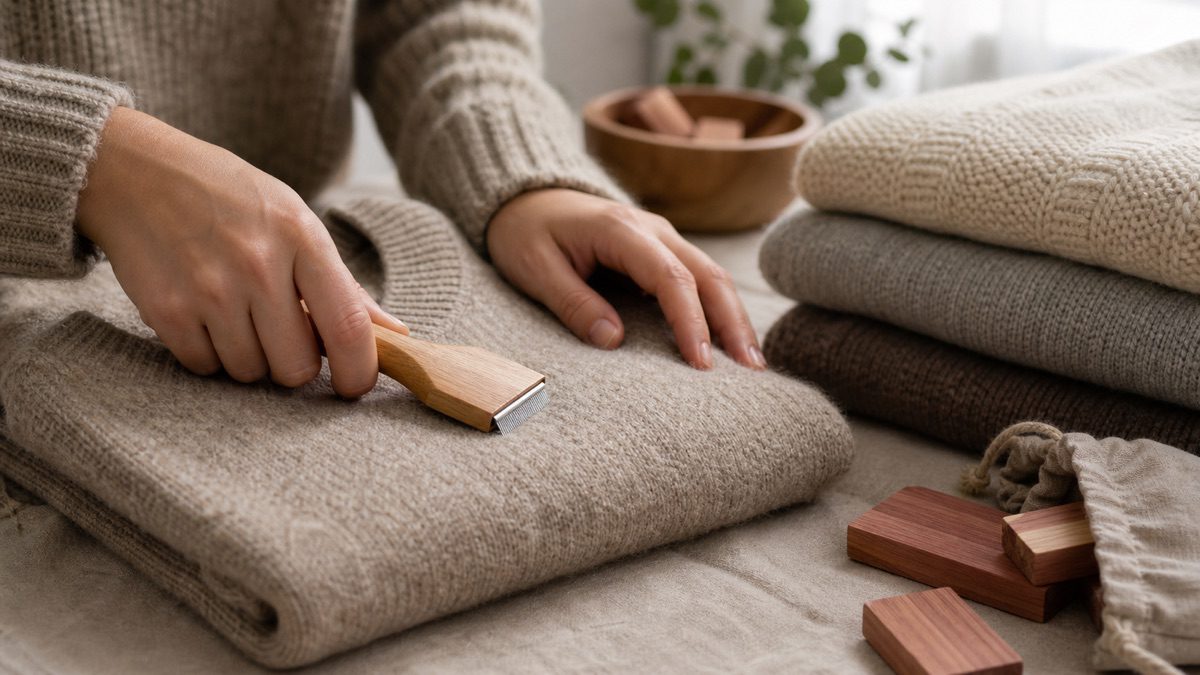
Care for sweaters with gentler washing, proper drying, thoughtful storage, and safe pilling removal to extend their useful life.
Understand why pilling happens
Pills form when loose or broken fibers move to the surface and tangle through friction. Soft, short fibers and high-contact areas such as underarms, sides, and bag straps are more vulnerable. Pilling does not always indicate poor quality, although rapid widespread pilling can reflect fiber and construction choices.
Wash less and air more
Knitwear worn over a base layer often needs airing rather than immediate washing. Follow the care label and address small marks promptly. When washing is appropriate, turn the garment inside out, use cool water and a gentle detergent, and avoid aggressive rubbing or long agitation.
Dry without stretching
Support the full weight of wet knitwear. Press out water gently without wringing, roll the item in a towel, reshape it to measurements, and dry it flat away from direct heat. Hanging wet knitwear can lengthen the body and distort shoulders.
Remove pills carefully
Use a sweater comb, fabric shaver, or small scissors on a flat, well-lit surface. Work slowly and avoid pressing into the fabric. Pulling pills by hand can draw more fiber from the yarn. Test any tool on an inconspicuous area first.
Store clean and supported
Fold sweaters instead of hanging heavy knits. Clean items before long storage because body oils and food traces can attract pests. Use breathable containers and inspect storage periodically. Cedar and lavender may add scent but do not replace cleanliness and physical protection.
Frequently asked questions
Does pilling mean a sweater is low quality?
Not always. Fiber length, softness, friction, yarn structure, and wear all contribute.
Can I use a razor to remove pills?
A purpose-made fabric shaver or comb is safer and easier to control.
Should sweaters be hung?
Most medium and heavy knits are better folded to prevent shoulder marks and stretching.
How often should knitwear be washed?
Wash according to odor, stains, skin contact, and the care label rather than after every wear.
Can stretched knitwear be reshaped?
Some natural-fiber knits can be gently reshaped while damp, but results vary.
Reduce friction between wears
Pilling often increases where knitwear meets bag straps, seat belts, desks, and outer layers. Rotate sweaters, allow fibers to rest, and choose smoother layers around high-friction areas when practical. Airing a clean sweater can reduce unnecessary washing, but stains and odors should be handled according to the care label and fiber.
Repair small problems early
A loose thread should not be cut automatically; gently move it to the reverse and secure it appropriately. Small holes can spread, especially near seams and underarms. Store a matching repair yarn when supplied and consult a knitwear repair specialist for valuable or delicate pieces. Always test de-pilling tools on a hidden area.
Knitwear care checklist
- Care label instructions were retained.
- Sweaters are washed only when needed.
- Wet knits dry flat in their intended shape.
- Pilling tools are tested before broad use.
- Holes and loose seams are repaired promptly.
Related ChicSeed guides
Continue with these practical guides from the same topic area:
