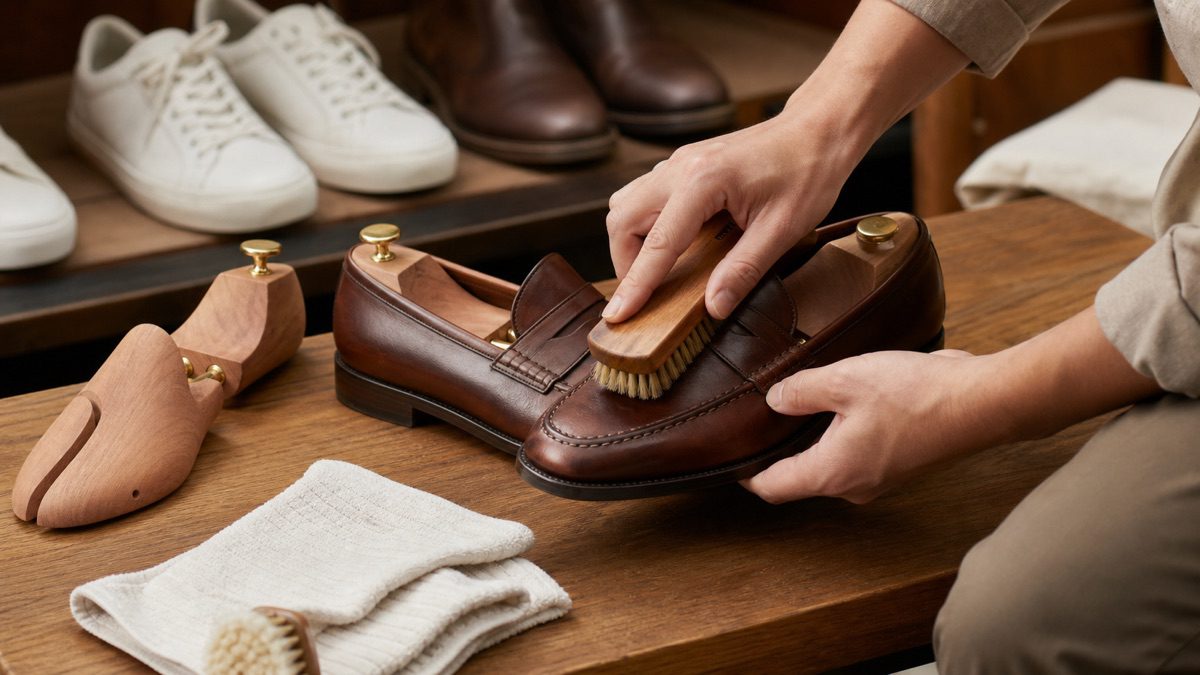
Use a simple shoe care routine for cleaning, drying, conditioning, storage, and timely repairs across everyday footwear.
Start with dry cleaning
Remove loose dirt with a soft brush or cloth before adding any product. Take out laces when they block access. Different materials require different tools, so keep suede brushes separate from brushes used with colored polish.
Dry slowly and completely
Remove insoles when practical and let damp shoes dry at room temperature with airflow. Stuff with plain paper or use shoe trees to support shape. Avoid radiators, hair dryers, and strong direct heat, which can harden leather, weaken adhesives, and distort components.
Condition and protect appropriately
Smooth leather may benefit from occasional conditioner followed by polish or cream. Suede and nubuck need products designed for their raised surface. Fabric sneakers vary, so check manufacturer guidance before soaking or machine washing. Test protectors on a hidden area.
Rotate high-use pairs
Giving shoes time to dry between wears can improve comfort and reduce odor. Rotation does not require a large collection; two suitable pairs for the same high-frequency role can be enough when weather or walking demands are significant.
Repair before failure
Inspect heels, sole edges, stitching, and interior lining. Replacing a heel tip or adding a protective sole is easier before structural damage occurs. A cobbler can advise whether the upper and construction justify repair.
Frequently asked questions
How often should leather shoes be conditioned?
Condition when the leather looks or feels dry rather than following an inflexible schedule.
Can wet shoes be placed near a heater?
No. Strong direct heat can damage leather, adhesives, and shape.
Are shoe trees necessary?
They are useful for moisture management and shape, especially in structured leather shoes, but not essential for every pair.
Can sneakers go in a washing machine?
Only when the manufacturer permits it; machine washing can affect glue, structure, and finishes.
When should soles be repaired?
Repair when tread or heel wear becomes uneven and before damage reaches the upper.
Rotate pairs to manage moisture and wear
Wearing the same shoes on consecutive demanding days can leave insufficient drying time and concentrate sole wear. When possible, rotate pairs and let them air away from direct heat. Remove loose dirt before it becomes embedded, and address wet shoes promptly using methods suitable for the upper, lining, adhesive, and sole.
Use products made for the material
Smooth leather, suede, coated fabric, canvas, knit uppers, and synthetics require different brushes and cleaners. Test products on a hidden area and protect nearby trim. Waterproofing sprays change appearance on some materials and must be used with ventilation and manufacturer guidance. Professional repair is often worthwhile before structural damage spreads.
Shoe routine checklist
- Pairs receive drying time between heavy wears.
- Dirt is removed with the correct brush.
- Conditioners and sprays are patch tested.
- Shape is supported during storage.
- Heel and sole wear is repaired early.
Related ChicSeed guides
Continue with these practical guides from the same topic area:
