Affiliate disclosure: Chic Seed may earn a commission from some merchant links. Our recommendations remain independently edited and reader-first.
Everyday flats have to balance polish, comfort, and durability across very different outfits.
The right pair works with dresses, denim, wide trousers, and office basics without needing a second shoe nearby.
Quick verdict
Choose comfort construction before choosing the trend shape.
What to look for
- fit: Check whether the recommendation works for the actual routine, not just for a photo or one special occasion.
- quality: Look for construction, materials, finish, care needs, or repeat-use signals that justify the price.
- value: The strongest option earns its space by being useful often enough to beat cheaper duplicates.
- maintenance: Care, storage, cleaning, battery life, or replacement parts matter more than most product pages admit.
- style: A good pick should blend into several outfits, rooms, schedules, or social situations without feeling forced.
Who this is for
Readers who want one polished shoe for many weekly outfits.
Who should skip it
Skip ultra-flat or delicate pairs if you walk a lot or commute in bad weather.
Practical buying notes
Check toe shape, sole flexibility, heel grip, insole comfort, and scuff resistance.
Useful comparisons
- If you care most about flats, choose the simpler option with fewer fragile details.
- If office days matters more, compare return policies and long-term upkeep before buying.
- If you are shopping for comfort, prioritize comfort and repeat use over trend language.
Editorial take
The best flats are quiet workhorses with enough shape to look intentional.
FAQ
Is this a product ranking?
It is an editorial guide, not a paid ranking. We focus on use case, tradeoffs, and value signals.
How often should readers revisit this advice?
Revisit it when your routine changes, when a product category updates, or when an older item stops solving the job.
Start with the hours you will actually wear them
A flat worn for a short dinner has a different job from one used for a commute and a full office day. Estimate standing time, walking distance, surfaces, weather, and whether feet tend to swell. A thin, flexible sole can feel pleasant indoors but tiring on pavement. A very rigid sole may feel supportive initially yet rub when the foot bends. Test the shoe for the longest likely use, not only for the first minute.
Evaluate fit at four pressure points
Check the heel, widest part of the forefoot, top line, and toe box. The heel should stay secure without digging into the tendon. The forefoot should not spill over the sole, and toes should lie naturally rather than grip to keep the shoe on. Walk on hard flooring, turn quickly, and use stairs if possible. Persistent rubbing is a fit signal, not a break-in strategy.
Match shape to the clothes you repeat
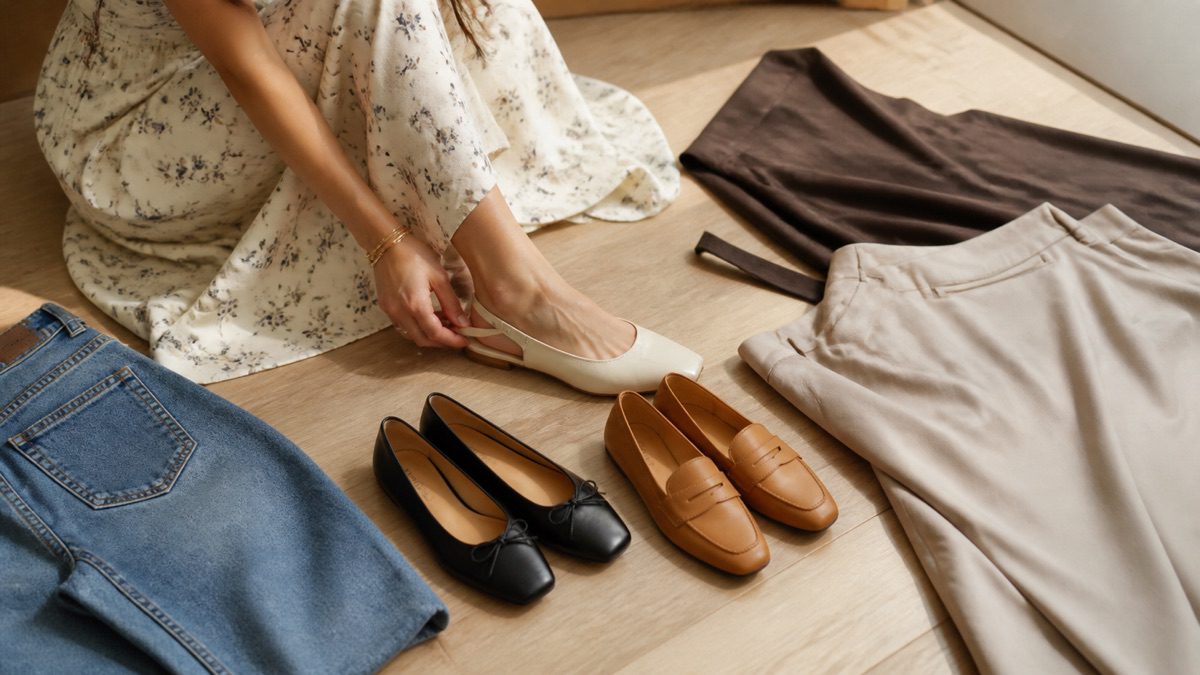
A lower vamp exposes more of the foot and can look light with dresses, while a loafer’s higher vamp often balances denim and tailoring. Pointed toes create a longer visual line but need enough internal width. Almond and square toes can offer more room without appearing overly casual. Photograph the shoes with three existing outfits before removing tags.
Inspect materials and repair potential
Look at lining texture, edge binding, insole attachment, heel construction, and how the upper joins the sole. Leather can adapt to the foot but still needs correct initial proportions. Textile and synthetic uppers vary widely in breathability and stretch. Replaceable heel taps, substantial outsoles, and clean stitching can extend useful life when the upper remains in good condition.
Before-you-keep checklist
- Walk for at least ten minutes indoors.
- Confirm there is no heel slip or toe gripping.
- Try the socks or hosiery you will use.
- Test with a dress, denim, and work trouser.
- Review the return policy before outdoor wear.
Related ChicSeed guides
Continue with these practical guides from the same topic area:
