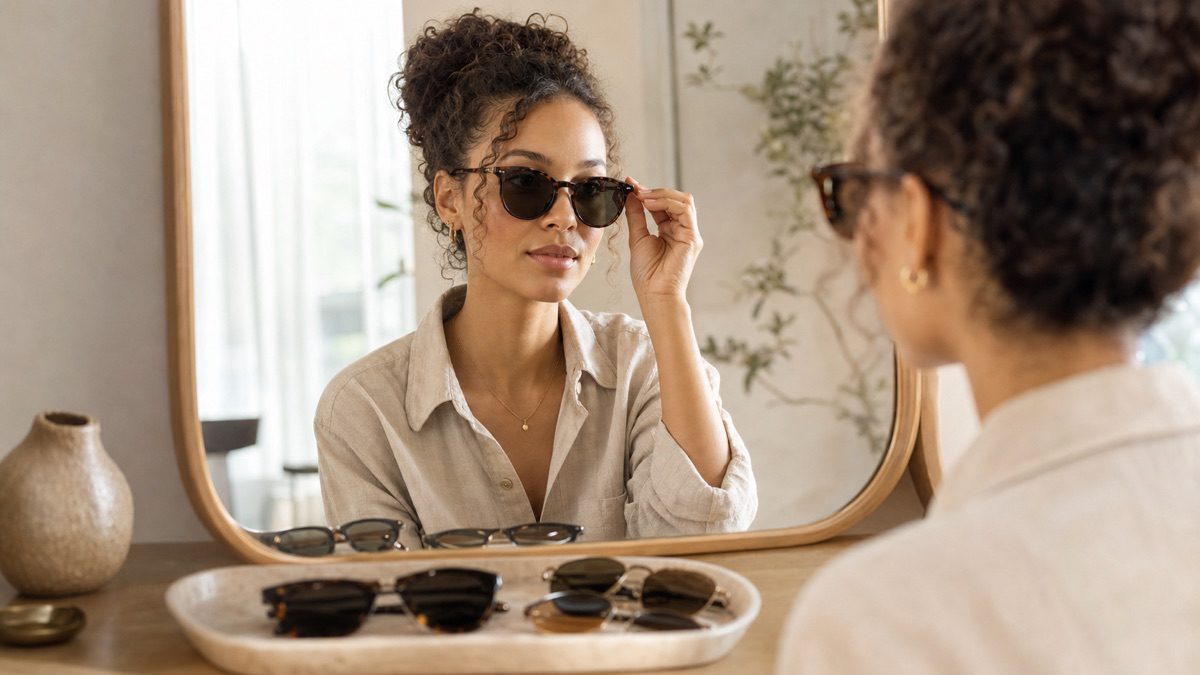
Choose comfortable sunglasses by checking frame width, bridge fit, temple pressure, lens coverage, and UV protection.
Confirm protection first
Look for a clear statement of full UVA and UVB protection or UV400 protection from a reliable seller. Lens darkness does not indicate UV performance. Polarization can reduce reflected glare from roads and water, but it is separate from UV protection.
Understand frame measurements
Many frames list lens width, bridge width, and temple length in millimeters. Compare these numbers with sunglasses that already fit. Total frame width and lens height also influence coverage, even when they are not listed.
Evaluate the bridge
The frame should remain stable without pinching or sliding. Plastic frames need a bridge shape that matches the nose, while adjustable nose pads allow more customization. Check whether lashes touch the lenses and whether the frame rests on the cheeks when you smile.
Check temples and balance
Temple arms should contact the head gently without creating pressure behind the ears. Heavy fronts can slide even when the width is correct. Wear the glasses for several minutes, look down, and move your head before deciding.
Choose coverage for the activity
Larger lenses and wrap shapes can provide more coverage for driving, hiking, and time near water. Fashion-focused narrow lenses may suit shorter urban use. Consider whether the frame works with hats, headphones, helmets, or prescription requirements.
Frequently asked questions
Does lens color affect UV protection?
No. UV protection depends on the lens treatment or material, not visible color.
What does polarized mean?
Polarized lenses reduce certain reflected glare, which can improve comfort around roads and water.
How should sunglasses fit at the bridge?
They should feel stable without pinching, sliding, or resting heavily on the cheeks.
Can sunglasses be adjusted?
Many optical shops can adjust temples and nose pads, although some molded plastic bridges are less flexible.
Are oversized sunglasses more protective?
They can offer more coverage, but only when the lenses provide verified UV protection and the frame fits well.
Verify protection independently of lens darkness
Dark tint does not by itself indicate ultraviolet protection. Look for a clear statement that the lenses meet the relevant UV protection or eyewear standard for the market, and ask the retailer when documentation is unclear. Polarization can reduce certain glare but is a separate feature. Prescription needs and eye-health concerns should be discussed with a qualified eye-care professional.
Test fit during normal movement
Wear the frames for several minutes, smile, look down, and turn the head. Check bridge pressure, lash contact, temple tension, and whether the frames slide. Try them with hats, headphones, and hair worn in common styles. A frame that needs constant adjustment is unlikely to become an effortless everyday pair.
Sunglasses checklist
- UV protection information is explicit.
- Frames remain stable without pinching.
- Lenses provide suitable coverage.
- Temples work with hats and headphones.
- The case fits the bag used most often.
Related ChicSeed guides
Continue with these practical guides from the same topic area:
